The problem hiding in plain sight
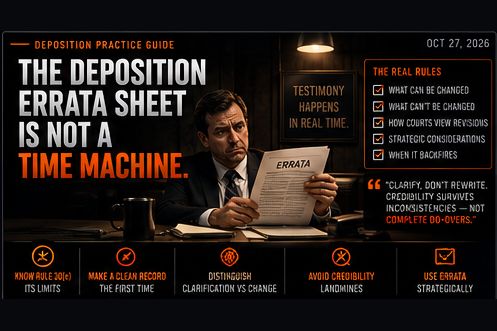
The transcript arrives and, miraculously, the witness remembers a better answer. Rule 30(e) provides a process for changes when its conditions are satisfied. It does not make the original testimony vanish.
Where to look first
Separate transcription mistakes from substantive revisions. “Fifteen” becoming “fifty” is different from “I approved it” becoming “I do not recall.” Document the stated reason and check controlling case law; courts have differed on the treatment of material changes.
The rehearsal that matters
For examining counsel, resolve ambiguity while the witness is in the chair. Who is “we”? Which meeting? Was the answer from memory or a document? For defending counsel, practice asking for clarification and correcting actual mistakes on the record.
The rule and the practical limit
Track the review request, transcript availability, deadlines, and every proposed change. Treat an errata sheet as an evidentiary decision, not a shared Google Doc with better punctuation.
A practical exercise for the next prep session
Before ending the meeting, have a second examiner ask five questions the witness has not seen. Include one inaccurate premise, one inconvenient document, one legitimate uncertainty, one follow-up that changes a fact, and one long silence. Record which answers require additional investigation. Correct the underlying preparation, not merely the wording of the answer.
What to take into the room
The goal is not to manufacture a perfect witness. It is to uncover uncertainty early, clarify what the evidence actually supports, and help a truthful witness remain accurate when questioning gets uncomfortable. Third Degree can support simulated questioning; attorney judgment and factual investigation remain essential.
The original answer remains part of the story
Federal Rule 30(e) permits changes in form or substance under its stated conditions, but the witness must list the changes and reasons. Courts differ in their treatment of substantial changes and their consequences. A transcription mistake, an ambiguous question, and regret over a damaging answer are not interchangeable. Preserve the original answer, proposed change, specific explanation, and objective support. “Clarification” is a poor explanation for a complete reversal.
A preparation drill you can actually run
Have a colleague ask the witness why the original answer was given under oath, what information changed afterward, and whether counsel participated in the review. If the witness cannot answer those questions accurately, an errata sheet may create an impeachment exhibit rather than solve a problem. Check the request for review, the availability notice, deadlines, stipulations, and governing jurisdiction before filing.
What the opposing examiner will ask next
A prepared examiner rarely stops at the first answer. They ask how the witness knows, which record supports it, what contrary material exists, and whether the answer would change if a key premise proves false. Practice that sequence with the real file, not a hypothetical universe where every document supports your side. Identify the questions the team cannot yet answer and assign investigation before the testimony.
The distinction matters: rehearsal is a method for discovering weaknesses and helping a witness testify accurately. It is not an invitation to invent facts, conceal documents, or polish an unsupported story. Counsel should evaluate local rules, case orders, privilege, and the actual evidentiary record before applying any technique.
A 20-minute partner-level review
Give a lawyer who did not draft the outline twenty minutes with the file. Ask for the three most uncomfortable questions, the most damaging exhibit, and the one answer that would trigger follow-up discovery. Have that lawyer question the witness without warning. Then discuss where the witness relied on firsthand knowledge, reviewed records, or assumptions. Repeat after genuine factual gaps are addressed.
The final check is simple: can the witness explain what they know, how they know it, and what they do not know without pretending? That is a far more valuable outcome than an impressive practice score.
Field guide: The correction triage worksheet
Rule 30(e) provides a review-and-change procedure when review was requested before the deposition ends, with a 30-day period after notice that the transcript or recording is available. It permits changes in form or substance with reasons, but courts differ in their treatment of substantive contradictions. A transposed date is different from replacing “I never saw the report” with “I reviewed it thoroughly.” Neither should be approached as a casual copyedit.
Put it to work
For each proposed correction, record the original answer, revised answer, specific reason, supporting source, materiality and anticipated follow-up. Ask the witness to explain how the error occurred without a script. Do not assume an errata sheet removes the original testimony. Where an answer is materially inaccurate, counsel should evaluate the appropriate correction promptly under governing law and orders. The best prevention is preparing witnesses to distinguish memory from inference and to request clarification rather than guess.
Legal source: Federal Rule of Civil Procedure 30 (Cornell LII)
Federal-law discussion is general; jurisdiction, local rules, and case orders may alter the analysis.
Get It Right the First Time. Errata Won't Save Bad Testimony.
Opposing counsel will read both your original botched deposition answer and your errata sheet to the jury. Practice answering tough factual questions cleanly in our AI Deposition Room so your transcript stands solid from day one.
Mock deposition drills with voice feedback · Zero Data Retention guarantee