Field Notes on Pressure
How to hold up when the questions get hard — depositions, cross-examination, interrogations, interviews, and every room where what you say gets used against you.
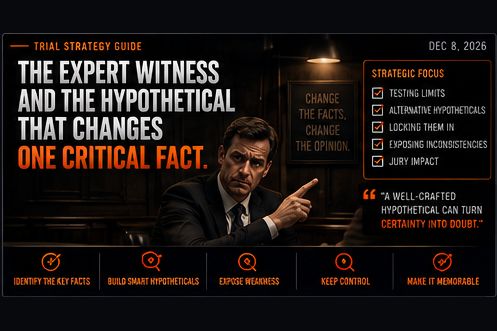
The Expert Witness and the Hypothetical That Changes One Critical Fact
A good hypothetical does not need theatrics. It needs one altered assumption. Practice explaining where the conclusion stops being valid.
Read →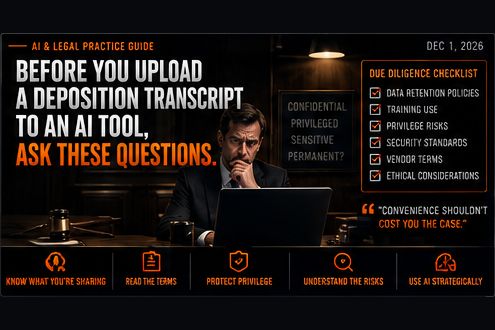
Before You Upload a Deposition Transcript to an AI Tool, Ask These Questions
A lock icon is not a data-processing agreement. The questions to ask before confidential testimony leaves the firm.
Read →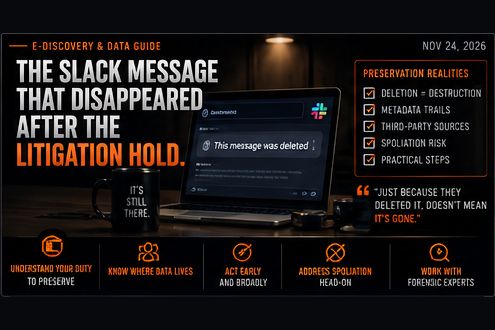
The Slack Message That Disappeared After the Litigation Hold
The retention setting was routine. The timing was not. Collaboration tools can erase material while lawyers still debate the hold notice.
Read →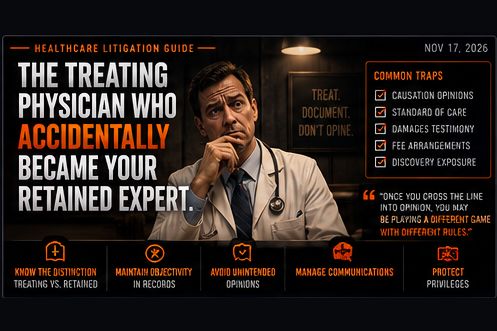
The Treating Physician Who Accidentally Became Your Retained Expert
"The doctor treated the patient" is not the end of the expert-disclosure analysis. The origin and scope of the opinions matter.
Read →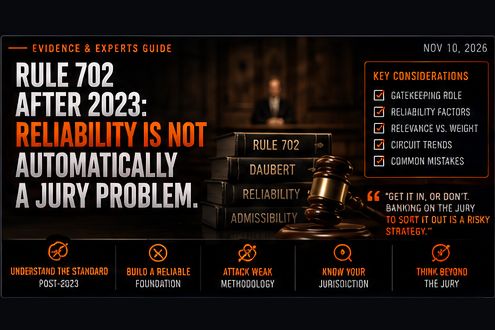
Rule 702 After 2023: Reliability Is Not Automatically a Jury Problem
The amended Rule 702 puts the burden on the proponent. Sufficiency of the basis and reliable application are not automatically jury questions.
Read →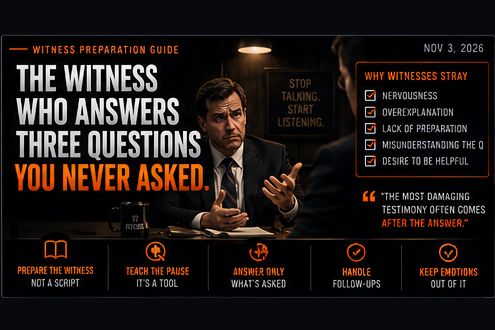
The Witness Who Answers Three Questions You Never Asked
The first answer was correct. The next forty seconds were opposing counsel's birthday present. Teach proportionality, not robotic brevity.
Read →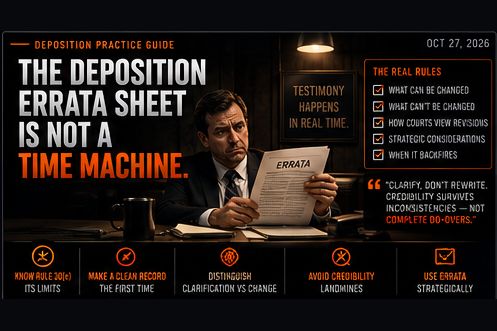
The Deposition Errata Sheet Is Not a Time Machine
The transcript arrives and, miraculously, the witness remembers a better answer. Rule 30(e) does not make the original testimony vanish.
Read →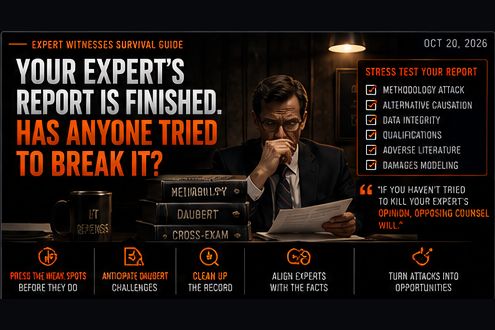
Your Expert’s Report Is Finished. Has Anyone Tried to Break It?
The expert signed the report. Everyone celebrated. Meanwhile, a footnote relies on an assumption nobody tested.
Read →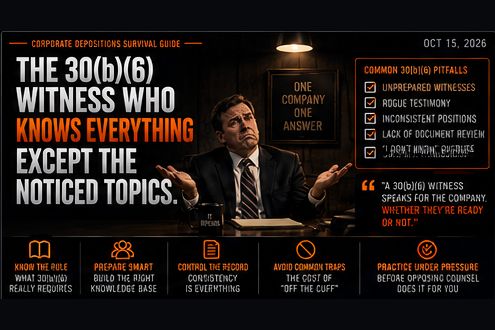
The 30(b)(6) Witness Who Knows Everything Except the Noticed Topics
An executive's institutional memory is not the organization's prepared testimony. Start with the notice, not the witness.
Read →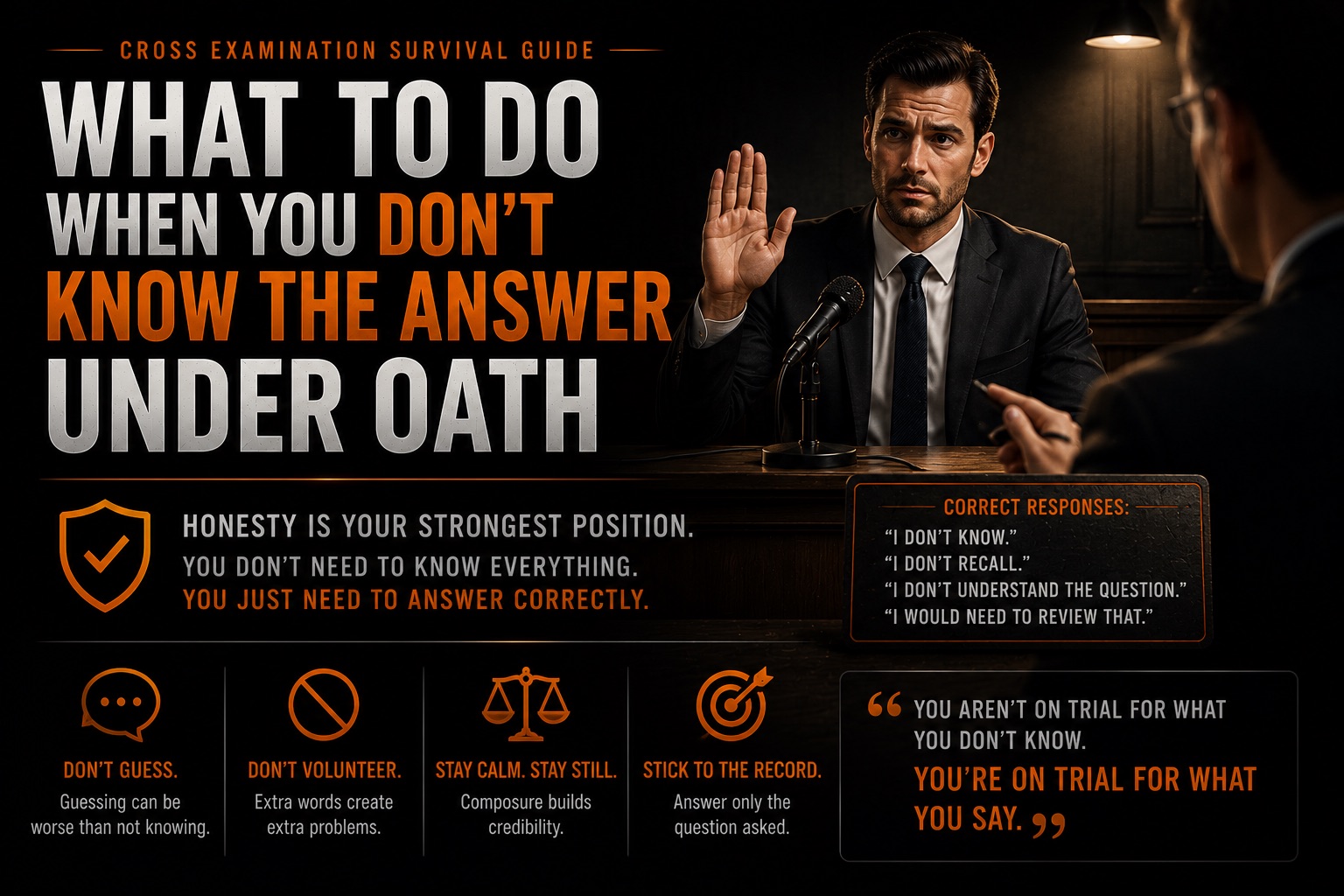
What to Do When You Don't Know the Answer — Under Oath
"I don't know" is a complete answer. Guessing is where witnesses get taken apart. How to hold the line without looking evasive.
Read →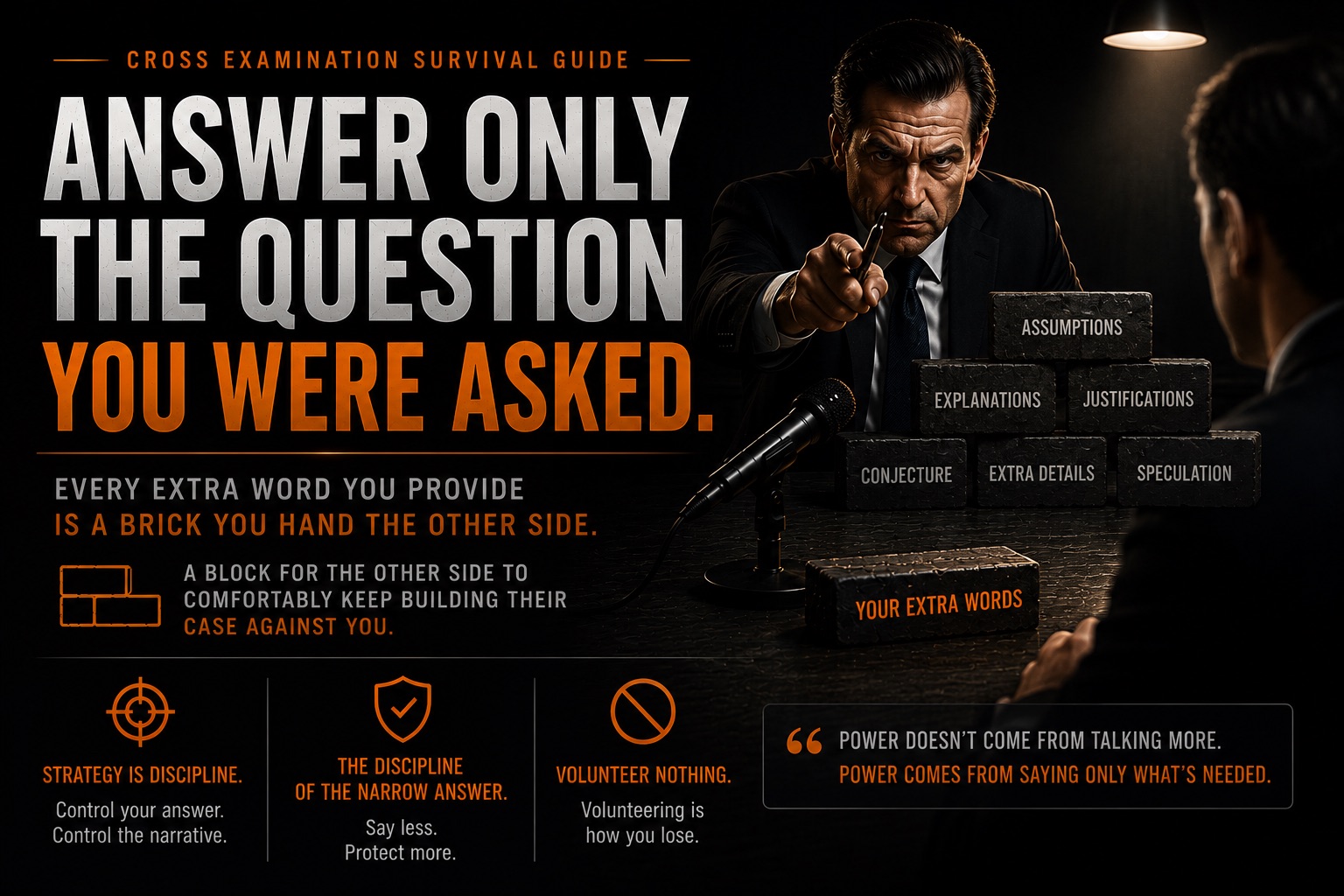
Answer Only the Question You Were Asked
On cross, every extra word is a brick you hand the other side. The discipline of the narrow answer — and why volunteering is how you lose.
Read →
How to Handle “What's Your Greatest Weakness” Without Flinching
The most predictable question in the room is a trap dressed as small talk. What they're really testing, and how to disarm it.
Read →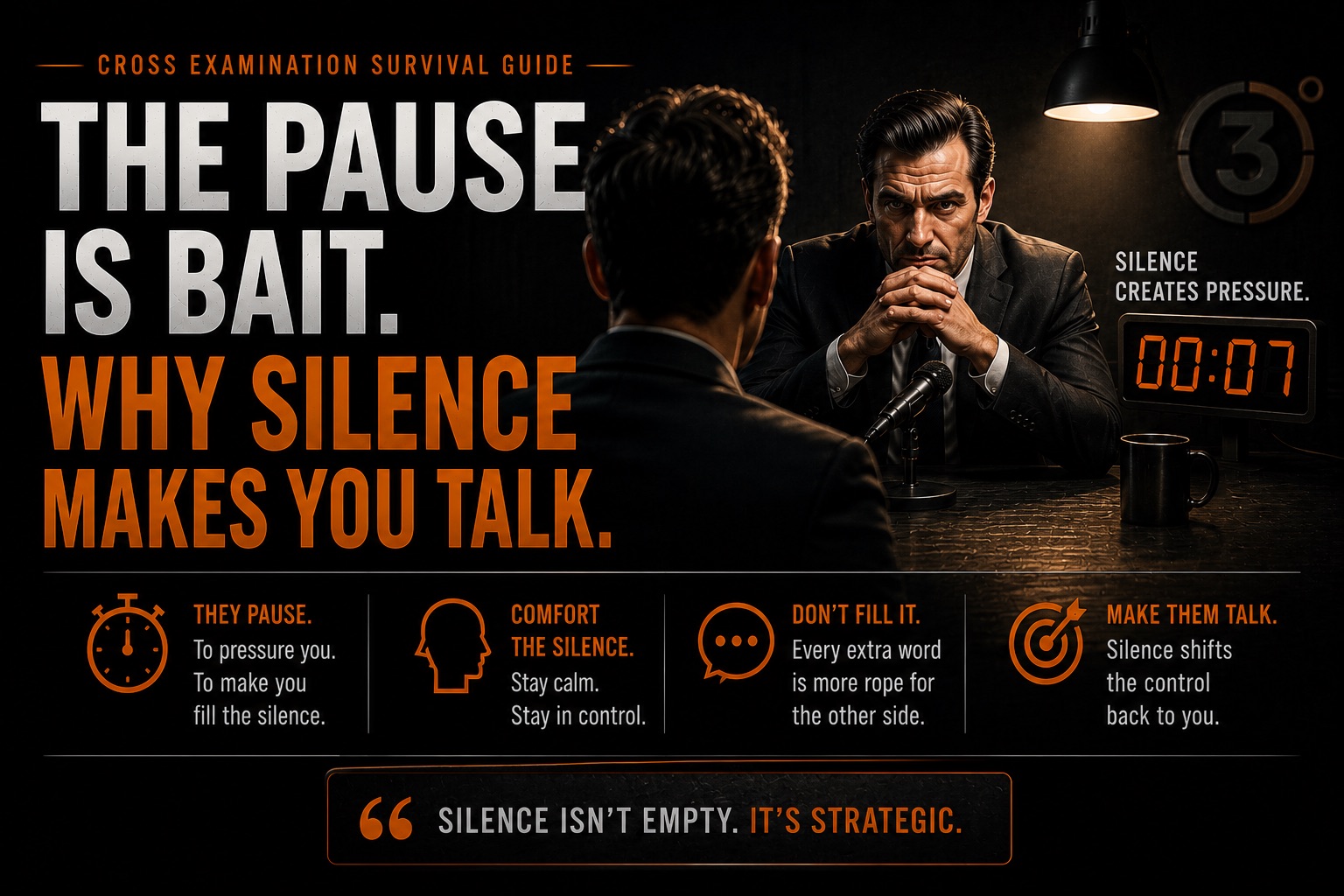
The Pause Is Bait: Why Silence Makes You Talk
Interrogators and negotiators weaponize silence — they stop talking so you will. The mechanism, and how to sit in it.
Read →
When They Attack Your Price: Reframe, Don't Defend
“Too expensive” is rarely about price. Defending the number concedes the premise. Reframe it — and never discount on reflex.
Read →