iPhone No sound in a session? It is a known Apple audio bug, not your device — and it clears with one tap inside the app. How to fix it →
Expert witness simulation: a biomechanical injury analysis, crash trajectory reconstruction and medical imaging laid over a courtroom, with treatises on medicine, engineering, accident reconstruction and expert testimony on the counsel table
← All scenarios Expert Witnesses & the Attorneys Who Cross Them

Two chairs. One technical subject.

Somebody is going to be wrong in front of a jury. An expert witness has to defend a field they have spent a career in against a questioner paid to make it sound shaky. The attorney doing the questioning has to understand that field well enough to take apart someone who genuinely knows it better. Third Degree practices both chairs — against a live voice AI that has read the CV and the report.

WHICH CHAIR ARE YOU IN? — Load the expert’s CV and report. If you are the expert, the AI is opposing counsel. If you are the attorney, the AI is the expert. Same file, opposite pressure.
For the Expert Witness

Defend your expertise against counsel who did the homework.

You know your field. The problem is that the person asking the questions has read your report three times, has your fee schedule, knows the one limitation you buried on page nine, and does not need to understand biomechanics to make a jury doubt you. Third Degree plays that attorney — in the Deposition room or on the Witness Stand — with your own CV and report as the case file.

  • It attacks the methodology, not the conclusion — what you did not test, what you assumed, what the literature says you should have done.
  • Fees, retention history, and bias — the questions that make a jury stop listening to the science.
  • Three-gate impeachment — it commits you, credits the record, then confronts you with the contradiction. The way it happens in a real deposition.
  • It punishes volunteering — every extra sentence becomes the next question.
  • Live Knowledge Spiral and a scored report — where you hedged, where you conceded too much, where you lectured when a “yes” would have done.
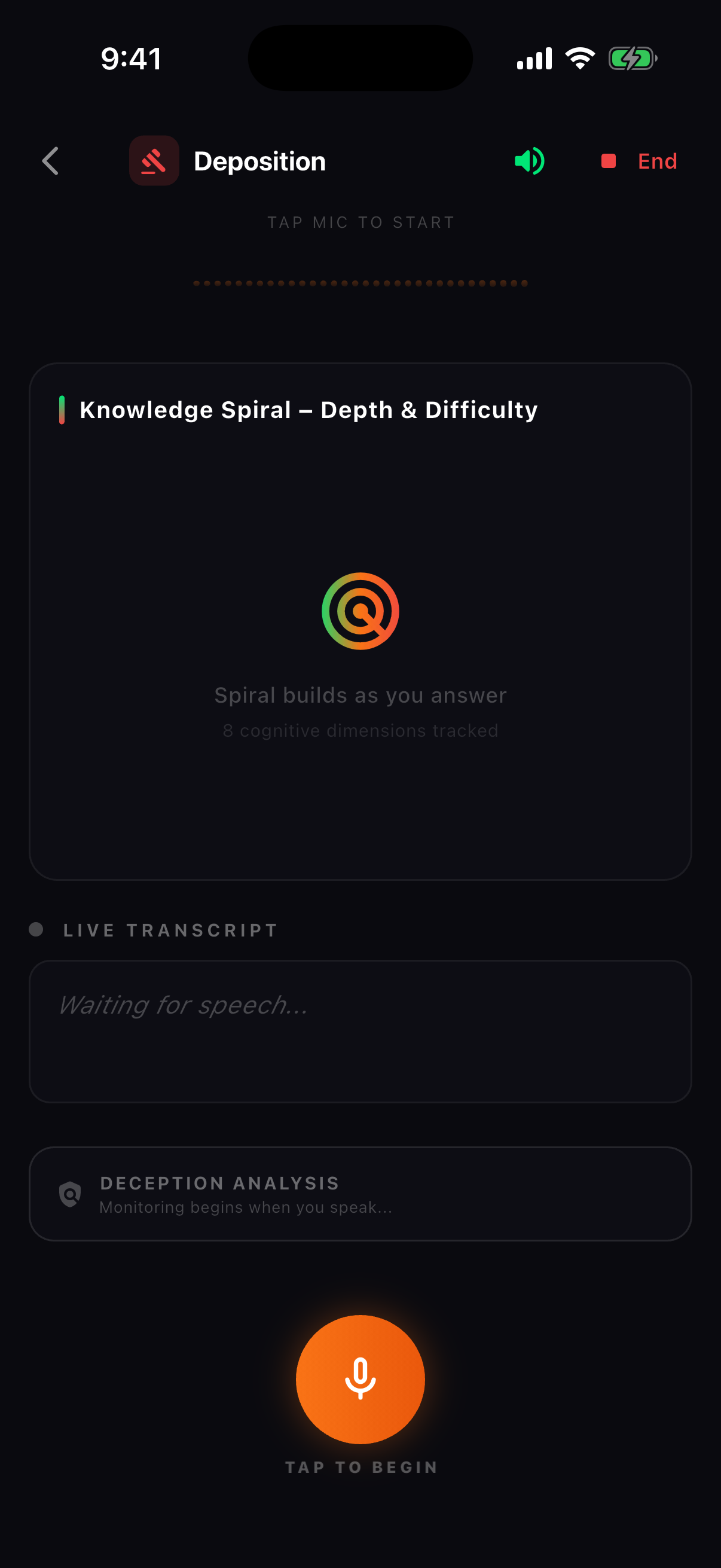
A live Third Degree session: the Knowledge Spiral building while an expert witness answers hostile counsel
For the Attorney

Command a subject you did not study, against someone who did.

Crossing an expert is the hardest examination in litigation. The witness knows more than you, is paid to be composed, and will use any open question to teach the jury. In the Cross-Examine an Expert room the chairs flip: you ask, and the AI is the expert — one that genuinely commands the field, corrects you when you misuse a term, and takes every opening you leave.

  • It concedes to good form — a short, leading, one-fact question gets a one-word answer. An open “why” gets a ninety-word lecture. You feel the difference immediately.
  • It exploits a weak grasp — misstate the science and it corrects you, for the record, the way a real expert would.
  • It never coaches — it will not tell you what to ask. The lesson comes in the report, not from the witness.
  • Eight scored axes built for cross — subject command, precision, commitment, form, impeachment, control, listening, discipline.
  • A report written for counsel — the openings you gave, and how to ask each question better.
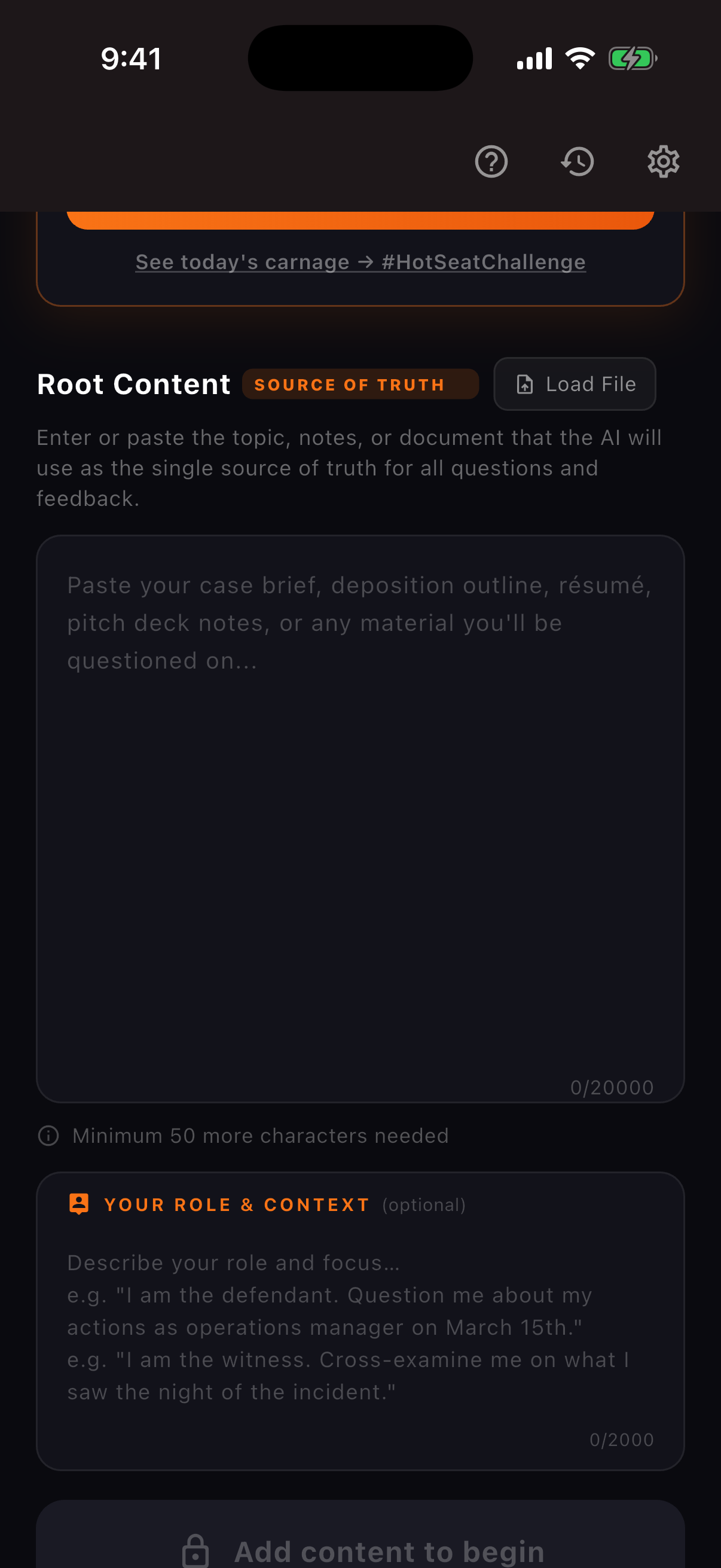
The Cross-Examine an Expert room: the expert's CV and report loaded as the case file, and the attorney's role and theory of the case
Expert Witness Briefing — Web App

Blueprint the witness. Print it. Then walk in and find out if it holds.

Before the simulation, paste the opposing expert’s CV and your case context and Third Degree builds the attack surface: where their credentials do not reach their opinion, which lines of cross are strongest, and what you need to understand about their field to run them. Save it as a PDF. Then cross-examine an AI version of that very witness, and read the report to see which vectors landed.

01 Ranked attack vectors Qualifications, bias, methodology, foundation — each with an opening question, a ladder of follow-ups, the concession you are after, and the risk. The plan
02 The literacy layer The field’s key terms in plain English, why each one matters to this case, and the landmines — the words that will get you corrected in front of the jury. Command the subject
03 Daubert exposure Where the methodology is open to challenge on reliability, testing, and acceptance in the field. Foundation
04 A suggested sequence The order to run it in, so the concessions build on each other and the witness sees the impeachment only when it is too late. Then simulate

The blueprint is read and saved before the session. It is not on screen while the witness is talking — the same as the real thing.

How It Runs

Same file. Opposite pressure.

01

Load the file.

The expert’s CV and report, plus the case context: who you are, what the matter is, what the expert was retained to opine on.

02

Pick the chair.

Expert: Deposition or Witness Stand. Attorney: Cross-Examine an Expert. Attorneys can build the briefing first.

03

Run the room.

Live voice, adaptive difficulty. Good answers — or good questions — buy harder ones.

04

Read the report.

Scored on the axes that matter for your chair, with the specific moments that cost you.

NOTHING KEPT — The CV, the report, and every word of the session are processed live and never stored. What we keep is arithmetic: scores, graphs, progress. An expert’s file and an attorney’s theory of the case never sit on our servers. The full commitment →
Practice Under Pressure

The first time you get taken apart, let it be here.

Preparation material, not legal advice, and no substitute for preparation with your own counsel. If your attorney’s instructions differ from anything the AI does or the report says, your attorney wins.